While I’ve already written an overview article on how to slash overgrown blocks and the different methods we can employ in this task, this tutorial will be a real world instructional on how I slashed one vacant block of land, including the reasoning for my decisions on how to accomplish this work for the best result in the least amount of time.
The Land
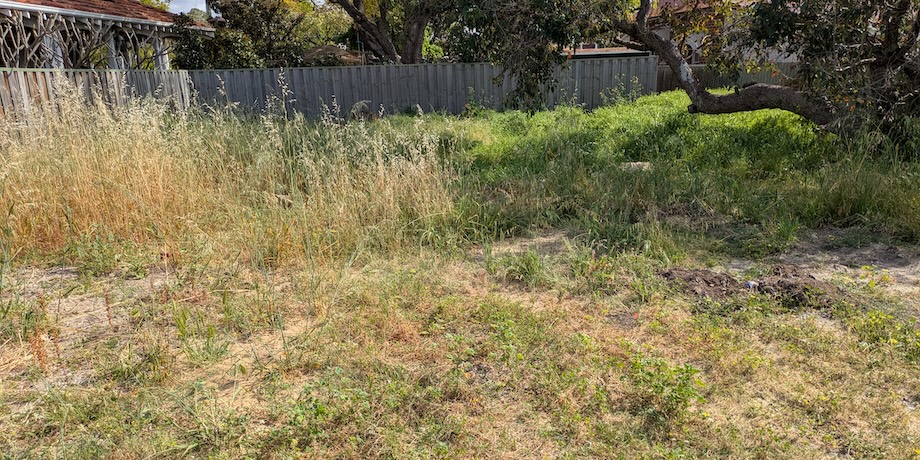
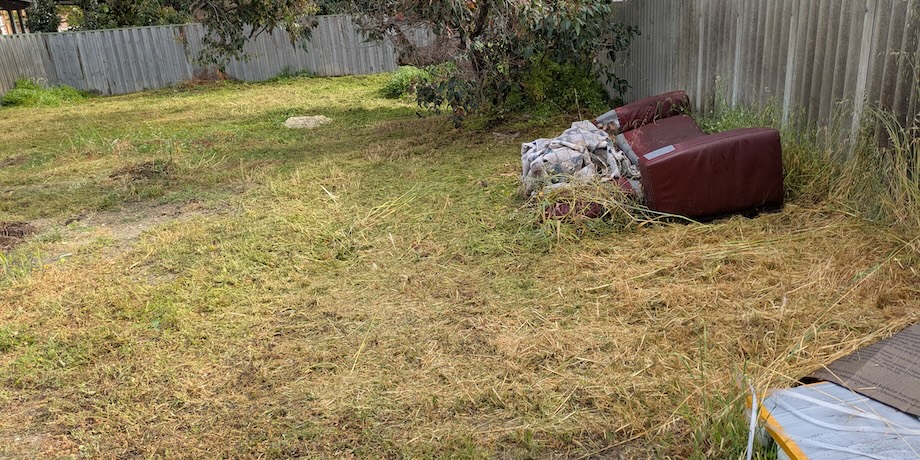
The photos speak for themselves on the condition of the overgrown grasses and weeds around the block. The day I mowed it had been raining through the previous night and into the morning, the grass was wet and thick in many places. There is a small mound of rocks on the left far side of the block, and a giant mound of rocks on the far right side of the block. There are various obstacles from tree branches to dumped rubbish like lawn clippings, dried concrete, lounge, and a few mounds of dirt.
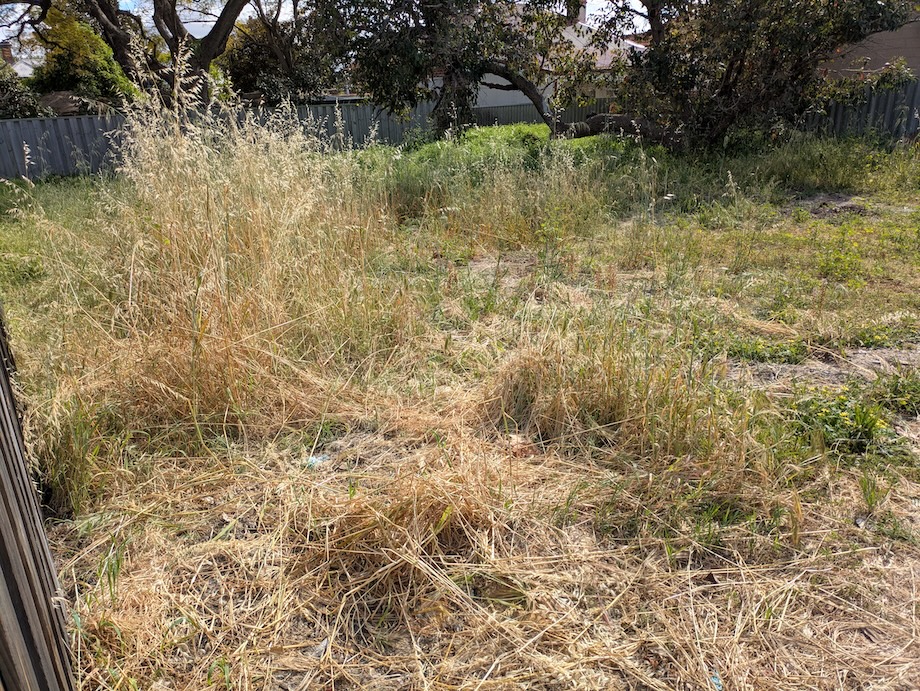
If this block of land was outside of its inner city location, I would be on the lookout for snakes.
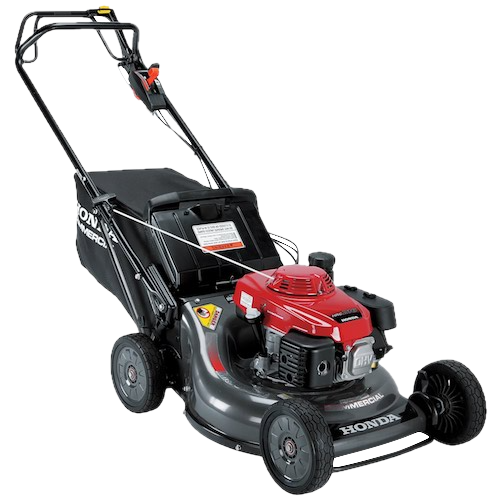
I mowed this block with my older Honda HRU 216 that I normally use for diseased lawns. I don’t own a utility mower because I so rarely do work like this that it could not pay for itself.
Scouting The Land
First I did a quick scout around for any large rocks, branches or other debris that might be hidden in the long grass. I decided to make a pile for branches at the top left corner of the block. The initial scouting didn’t bring up a lot, because grass and weeds were literally growing all over the top of many other branches, piles of sand, other obstacles, and rocks.
Method Of Mowing This Block
I knew this block would need two passes with the rotary lawn mower in order to get the best finish. Mowing with only a single pass would have left long grass stalks all over the block, some stalks would have stood up again within a week, and the mowed grass would have looked messy and half done with much remaining grass still sticking up everywhere. After doing my first pass with mowing this proved my analysis and mowing method to be correct.
Trimming around all perimeters might normally be considered as the first step, but not on this block due to the thick wet weedy grass everywhere, and how long it was. For me to have trimmed all around the fence lines and mounds of rocks and debris would have taken much longer and wasted a lot more time than the method I went with.
The first step for me was to mow the entire block with the height set on the highest setting. I went right up as close as possible to the fence line and any debris piles. The lawn mower would bump into anything that got in the way in the long grass, I would then stop and clear the obstacle or go around it.
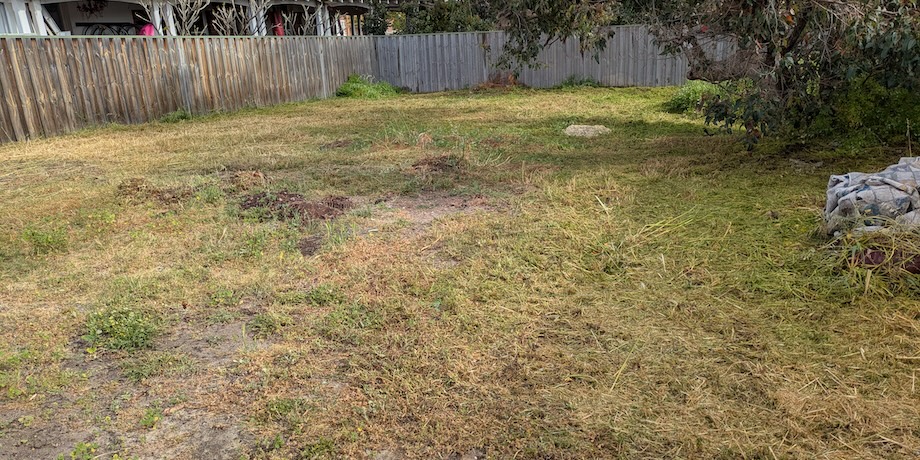
The mowing could only be done in ⅓ mower width with each pass on the first mow, and as I mowed and cleared out and walked down each square foot of the property with my eyes fixed downward, I could then spot many more branches and rocks and other debris as I went.
I used the lawn mower to cut through as much thick grass as possible, this powerful engine on this purpose built machine did all the hard work, and slashed the trimming time down by a lot.
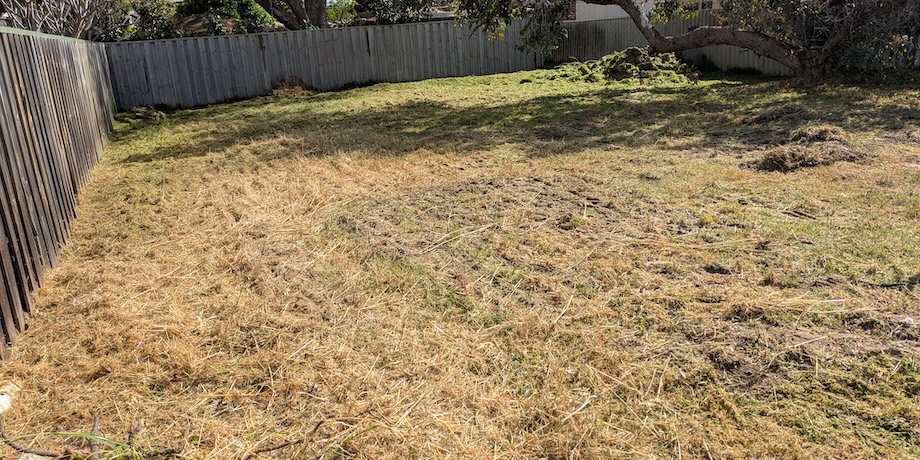
I then trimmed all perimeters and around mounds of rocks and other debris, this didn’t take very long, as in many places the lawn mower had gone up to a centimetre close to the fence and very close to the mounds. To try to reduce the number of times that long grass tangled up the trimmer head in long grass, I used an up and down motion through the long grass to try to cut centimetres of grass at a time, rather than trying to slash through 3 feet long grass in a single motion.
If I had trimmed the fence lines first I would have slashed about a foot in width from the fence. Doing the trimming second meant I only often trimmed one to a few centimetres of grass, saving an enormous amount of time.
No matter which order I used, the lawn mowing would take the same amount of time.
This is when I also trimmed all over those mounds of rocks.
I then mowed the block again, this time reducing the height by two notches, if the grass was dry I could have gone down three notches for a better finish.
This mowing then chopped up all long stems remaining from the first mowing, and also took care of all long grass that had been slashed and spread out from fence lines and around obstacles and debris and mounds of rocks. The result was that there were no long bits of grass left over or sticking up at all, the block was what it was and I did the best job I could, and this second mowing left everything looking as if it had been properly mowed, that the job was properly done.
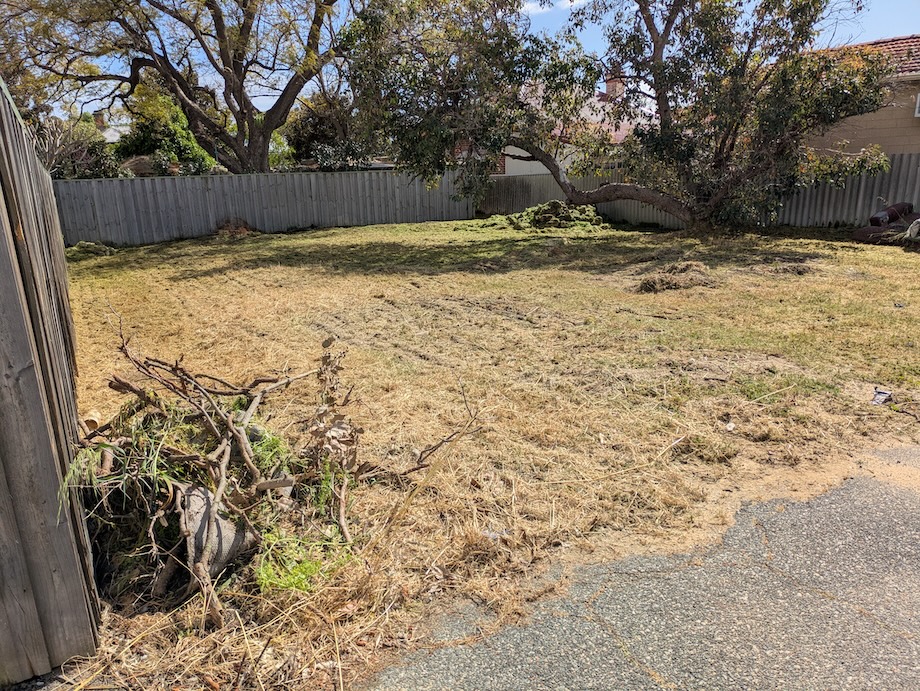
There was only a bit of dry grass on the road to blow back at the end of the job.
This entire job took 80 minutes, for a job done properly.
all articles and images are © copyright
thelawnmowingman.com